Paul Otlet, Henri La Fontaine and the birth of information science
history science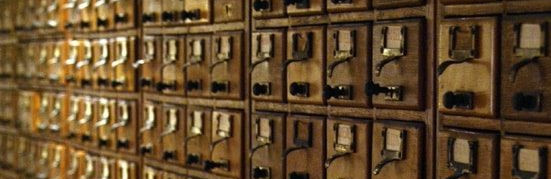
In the time of high attention to AI and data science we talk about the high value of data and how large amounts of it are precious. Governments try to regulate how it is collected, shared and protected. But do you know who are the fathers of information science?
I stumbled upon this wikipedia article of a Belgian who lived in the 19th and 20th centuries. The article had only 1400 visitors over the last 30 days. I thought it was a pity that I had never heard of that man. His name was Paul Otlet and he wanted access to knowledge for people. His friend and colleague Henri La Fontaine was the first president of the International Peace Bureau - the world’s oldest international peace organisation, with 10 of its members having received a Nobel Peace prize - his article even less visited.
In short Otlet got fascinated by sharing information and set up a service where cards containing text were carefully curated and systematically queried. The amount of requests quickly grew in a matter of years. This is why I mentioned wikipedia earlier - it was the same idea - just in 1896, and much slower. It was meant to be easy to use for searching information and used a concept similar to hyperlinks.
The government of Belgium gave him buildings and budget to expand his efforts. But then the Great War started, where one of his sons lost his life. Otlet believed that forming an international organisation that promotes knowledge sharing can prevent future wars and he defined a charter of human rights.
I felt strange that the information about this man is not more well known. And it makes me think not about the man, but about the relationship we as a civilisation have with information. Its value over the centuries and our desire to ask for it and use it.
Another thing I found interesting is that he was not stuck in his ways and beliefs. When new tech like radio and microfilm came up he started incorporating it in his efforts. I can imagine how someone else would have seen these new changes as a threat.
He did also have dreams of building a utopian city that would be the center of the knowledge of the world, but despite never being even started he still worked on what he believed for the rest of his life.
References:
- Britannica. "Paul Otlet". Accessed 22 Feb, 2025. https://www.britannica.com/biography/Paul-Otlet